
Truckload Shipping
Your freight, our trailer, nothing else on board — direct from pickup to delivery with no cross-docking.
One Load, One Trailer, One Set of Hands
Every time freight is unloaded and reloaded, something can go wrong — product gets damaged, pallets get separated, a day disappears. Full truckload removes those handoffs. Your freight is loaded at origin and comes off at destination, on the same trailer, moved by the same driver.
Spider Trans runs full truckload out of Selma, California, in both refrigerated and dry equipment. Three trucks, active interstate authority since 2022. Because we are small, the person quoting your lane is the person who knows whether we can actually cover it.
When Truckload Is the Right Call
You have enough freight to fill a trailer
Roughly ten pallets or more, or freight heavy or bulky enough to justify the space. Below that, LTL is usually cheaper and we will tell you so.
The freight is fragile or perishable
Handling is what damages product. Truckload means it is touched at origin and destination, and nowhere in between.
Timing actually matters
LTL freight moves on a network schedule through terminals, and every terminal is a chance to sit. A truckload runs direct on your schedule.
The load needs to stay sealed
Protein, food-grade and security-sensitive freight benefit from a seal applied at origin and broken at delivery, with nothing in between.
You want one carrier accountable
With a single carrier on a single trailer, there is no argument about which link in the chain caused a problem. It was us, or it was not.
The freight is worth protecting
High-value loads carry less risk when fewer people handle them and the trailer never opens between the two docks that matter.
Equipment and Capacity
|
Specification |
Figure |
|---|---|
|
Trailer length |
53′ |
|
Standard pallets |
Up to 26 (48×40) |
|
Typical payload |
42,000–45,000 lbs |
|
Interior length |
About 52’6″ |
|
Interior width |
About 8’2″ |
|
Door opening height |
About 8’5″ |
|
Equipment types |
53′ refrigerated · 53′ dry van |
Payload varies with the tractor and how the load sits. Send weight and pallet count with the lane and we confirm the fit rather than discovering a problem at your dock.
Booking a Truckload
1. Send the lane
Pickup and delivery cities, pallet count, weight, commodity, equipment type and appointment windows.
2. Same-day answer on capacity
You get a yes or a no the day you ask, which is worth more than a maybe.
3. Pickup and seal
We arrive in the window, load, and seal at origin. The seal number goes on the paperwork.
4. Direct run and delivery
Straight through to destination. Signed bill of lading, seal intact, delivery documented.
Where Truckloads Go
We hold active interstate authority — USDOT 3973481, MC-1485546 — so we are not limited to California. Most of our work originates in the Central Valley and runs in-state or into neighbouring states.
Selma is well placed for it. Highway 99 runs north to south through town, Highway 43 crosses it, and Interstate 5 is fifty-two miles west when a load needs the west-side run toward Los Angeles or north to Sacramento and Oregon. Highway 180 is eleven miles north and Highway 41 fifteen miles northwest.
We would rather tell you a lane does not work for us than take it and run it badly. If it is not a fit, you hear that on the first call.
Reefer or Dry Van — Same Service, Different Box
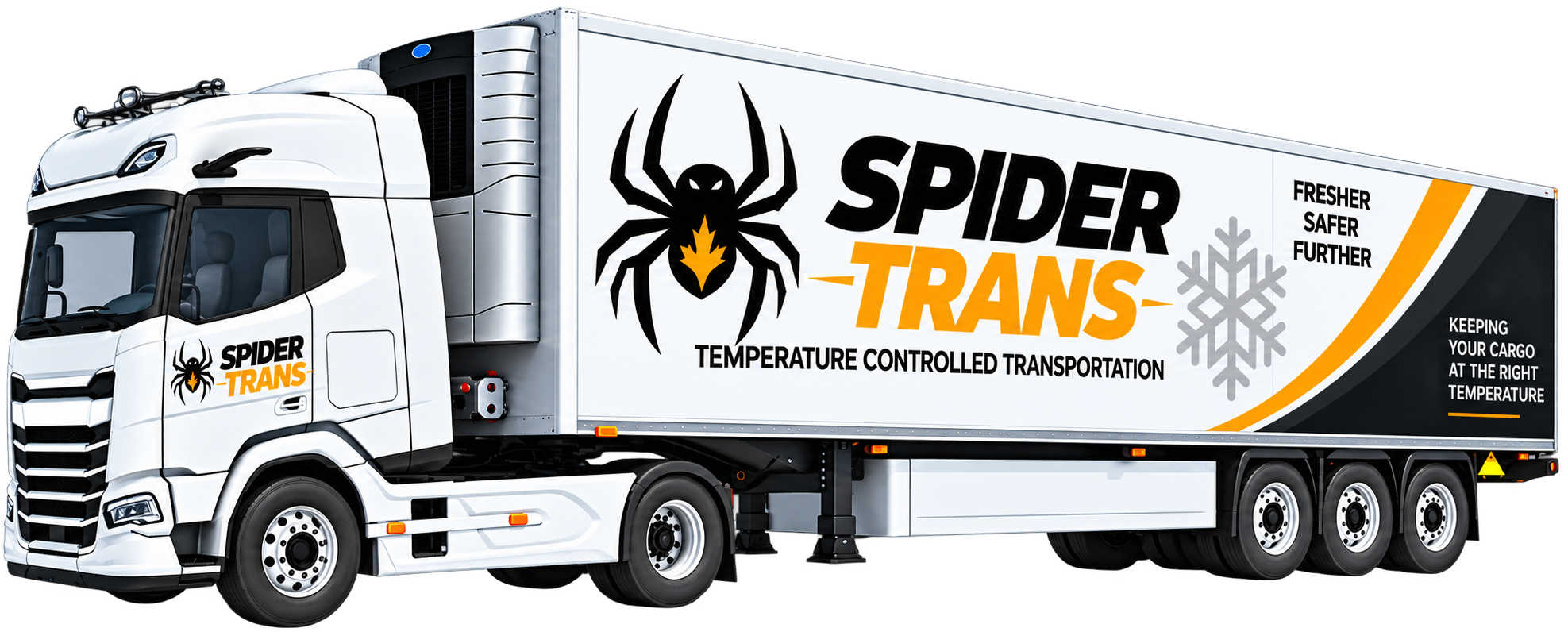
Most of our truckload work runs refrigerated, because most of what leaves this valley is perishable. The process is identical either way: same trucks, same drivers, same direct routing, same documentation.
If you are not sure which you need, say so when you call. Some freight that shippers assume needs a reefer travels perfectly well in a dry van in cooler months, and that saves you the fuel cost of running the unit.
Common Questions
Our Other Services
Have a Full Load to Move?
Send the lane, the weight and the pallet count.